Portfolio Analysis · Tax-Integrated Investment Management

The world changed.Most portfolios didn’t.

A second look at your portfolio. Risk exposure, costs, performance, and the structural tools most advisors aren’t using. For investors five to twenty-five years from retirement.

Book a 15-Minute Call15 min · Complimentary · With Shaun Eck
A Note from Shaun
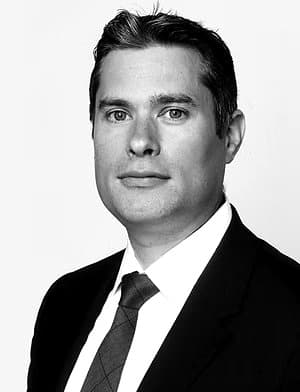
Shaun Eck

I left Wall Street.Here’s the short version of what happened next.

I spent the last few years at one of the big Wall Street firms quietly working on something better. Their platform wasn’t built for clients. It was built for the firm. So eventually I left.

I hired the same research group that supports hedge funds and institutional analysts, layered my own methodology on top of it, and ran a portfolio of twenty-five to thirty stocks at a time. Deep value and growth at a reasonable price. It worked. My clients did well.

Around the same time, I was doing work for a multi-billion-dollar family office. And inside that world I was seeing structures and strategies I’d never come across at my old firm. Not because they were secret. Because they weren’t built for retail. They were built for people who could demand better.

The timing of all this mattered. For most of the last fifteen years, making money in the market wasn’t that hard. Rates at zero, inflation nowhere, the world relatively quiet. That market is gone. Tech is shifting from asset-light to asset-heavy, which is expensive. Inflation is sticking around. There’s real tension out there now. Risk is back in the picture. And most portfolios are still built for the market we just left.

That work is what led me to a tool I’d never seen before. What it did was unusual. It let me put a contractual floor under a client’s portfolio without giving up the upside. I’d spent years picking stocks to add value, and this was something completely different. A way to change the shape of a return, not just its size.

The reason I’d never seen it? My old firm manufactures its own investment products. The investment bank designs them. The wealth management arm sells them. Anything that interferes with that natural order has a hard time getting traction on the platform.

That’s the gap I want to close for you.

— Shaun Eck

Co-Founder · The Quantus Group

The Thesis

The market that built your portfolio is over.Have you adjusted?

From the financial crisis to the end of 2021, the U.S. market ran on the easiest set of macro conditions in a generation. Interest rates were anchored near zero. Inflation barely registered. Geopolitical tension was muted. Buying the dip worked, holding worked, and the longer you stayed in, the better you did. Portfolios that were built for that environment looked brilliant inside it.

That environment is gone. Rates have reset. Inflation has proven structural, not transitory. The technology cycle that drove the last decade of returns is shifting from asset-light software economics to asset-heavy AI infrastructure, and that transition is enormously expensive. Global supply chains, defense budgets, and energy systems are all repricing in real time.

The market ahead is not the one your portfolio was designed for.

Most portfolios haven’t adjusted. Allocations drift, positions accumulate, the playbook stays the same. What used to be passive resilience now reads as passive exposure. Sequence risk is real, the easy gains are harder to come by, and the years between now and retirement are not the years to discover the difference.

Allocation vs. Location

What you own matters.Where you own it matters more than most realize.

Every advisor talks about allocation. How much in stocks, how much in bonds, how much overseas, how much in alternatives. Allocation is the part of investing the industry trained itself to talk about, because it’s the part you can show on a pie chart.

Location is the quieter decision. Same portfolio, same holdings, but the after-tax outcome changes depending on which account holds which asset. A high-yield bond fund in a taxable brokerage account is one return. The same fund in an IRA is a different one. A growth equity in a Roth is different again. The math is not subtle, and over twenty or thirty years it compounds into a number that’s difficult to ignore.

Most investment advisors don’t optimize location, because tax isn’t their job. They hand you a tax package in March and move on. Most CPAs don’t optimize allocation, because investments aren’t their job. They file what happened and move on.

Quantus is both. Every portfolio decision we make is run through a tax lens, because that’s the firm we built.

Diag · A1

Same dollar. Two accounts. Different outcome.

  • Bonds and high-income assets generally belong in tax-deferred accounts where the income isn’t taxed annually.
  • Growth equities often belong in Roth accounts, where the appreciation will never be taxed.
  • Tax-efficient index funds can sit in taxable brokerage accounts and produce minimal annual drag.

A simplified view. The actual analysis is specific to your accounts, your bracket, and your timeline.

The Platform Gap

Why you haven’t seen this.It isn’t personal. It’s structural.

Most advisors are not bad at their jobs. They’re doing what worked for the last thirty years. They built their practice on a playbook that delivered for a generation of clients, and the playbook is mostly still serviceable.

But the toolkit has expanded. Strategies that exist today weren’t available at the institutional level in 2008. The advisors who learned the business before these tools existed are generally not the ones going out to find them.

That’s the first half of the gap. Inertia.

The second half is harder to talk about politely.

Most large wealth management firms are part of larger institutions. The investment bank under the same roof designs proprietary investment products. The wealth management arm sells them. The economics of that arrangement don’t require anyone to do anything wrong. They simply shape what makes it onto the platform.

A third-party tool that does the same job as the firm’s own paper isn’t going to get featured. It isn’t going to be in the morning meeting. It isn’t going to be the thing the advisor stumbles onto by accident. Anything that interferes with that natural order has a hard time getting traction on the platform.

None of this is a conspiracy. It’s gravity. And gravity shapes what you’ve been offered.

That’s the gap an analysis closes.

The Analysis

A written second opinion.From a tax firm with investment management pedigree.

The Portfolio Analysis is a written deliverable, not a sales call. We review your accounts, your holdings, and your costs through both an investment lens and a tax lens. Then we tell you what we see, what we’d change, and why.

$1,497. Delivered within 10 business days.

The analysis stands alone. You may choose to engage Quantus to implement the recommendations, or you may take the report to your existing advisor. Either way, you leave with a clearer picture of what you own, what it’s costing you, and what’s possible.

The first step is a 15-minute call to determine whether the analysis is a fit for your situation.

You leave with
  • A written assessment of your current portfolio — allocation, risk exposure, costs, and historical performance benchmarked against appropriate indexes.
  • An analysis of asset location: which accounts hold which assets, and where after-tax outcomes are being left on the table.
  • Recommended structural changes — specific, prioritized, with implementation detail where appropriate.
  • A modeled projection of after-tax outcomes under the recommended structure versus your current portfolio.
  • A realistic implementation timeline, if you chose to engage Quantus to execute.
Book a 15-Minute Call15 min · Complimentary · With Shaun Eck
Voices

From our clients.In their own words.

  • [Placeholder — testimonial from a client whose previous advisor never proactively reviewed allocation or location. Specific about what was found and what changed.]

    [Client First Name + Last Initial]

    [Profession or context · Years with Quantus]

  • [Placeholder — testimonial from a pre-retiree about sequence-of-return risk and the contractual floor concept. Specific about the peace of mind a defined structure provides.]

    [Client First Name + Last Initial]

    [Profession or context · Years with Quantus]

  • [Placeholder — testimonial from someone who hesitated to switch from a long-standing advisor. Specific about the friction and what made it worth it.]

    [Client First Name + Last Initial]

    [Profession or context · Years with Quantus]

Testimonials provided by current clients. No compensation was provided in exchange. Individual experiences vary. Past performance is not indicative of future results.

The Principals

The call is with the peoplewho do the work.

Shaun Eck
§ SHAUN ECK

Shaun Eck

Managing Partner · Co-Founder

Former Merrill Lynch and family office advisor. Nearly twenty years designing investment management and estate planning strategy for business owners and private families. Leads the investment management practice at Quantus.

Jordan Frenkel
§ JORDAN FRENKEL

Jordan FrenkelCPA, MBA

Managing Partner · Co-Founder

Former executive at Guggenheim Partners. Deep background in entity architecture and tax planning, responsible for the structural modeling work underlying every client engagement. Leads the tax practice at Quantus.

Questions

What people ask.Answered honestly.

A short, focused conversation to determine whether the analysis is a fit. Shaun asks about your current situation, your accounts, your timeline, and what prompted you to consider an outside look. If the analysis is right for you, we’ll talk about next steps. If it isn’t, we’ll tell you that directly. No sales pitch, no follow-up sequence.

A written deliverable covering your allocation, asset location, costs, performance benchmarking, and recommended structural changes — including specific configuration detail where structural reallocation is appropriate. Modeled after-tax projections. A realistic implementation plan if you chose to engage. Delivered within 10 business days of receiving your account statements.

The analysis is independent. You can take it to your existing advisor and ask them to implement the recommendations. Many clients do exactly that — they wanted a second opinion, not a new advisor. The deliverable is yours.

No. The analysis is a standalone deliverable. We’ll tell you what we’d do and why. Whether you implement it with us, with your existing advisor, or on your own is your decision. If you do want to engage, we’ll talk about that as a separate conversation.

The analysis is most valuable for portfolios in the high six figures and above, where structural decisions — location, tax treatment, instrument selection — produce measurable annual differences. If your portfolio is smaller than that, the 15-minute call will surface that and we’ll be straight with you.

Shaun Eck leads the analysis. Jordan Frenkel, CPA, MBA, is involved on the tax-integration work — asset location, after-tax modeling, structural recommendations. You’re not handed off to a junior analyst. The call is with Shaun. The deliverable is signed by the people who produced it.

Then it does. The point of the work is honesty, not conversion. If your current setup is well-built for your situation, we’ll tell you and you’ll have a written second opinion confirming it. That’s worth the analysis fee on its own.

Next Step

Book a 15-minute call.

We’ll figure out whether a full portfolio analysis is the right next step for your situation. No sales pitch, no follow-up sequence. Fifteen minutes with Shaun.

Book a 15-Minute Call

15 min · Complimentary · With Shaun Eck