
Sheet A-000 · Cover
Investment Management
Investments and taxes. All under one roof.
None of it was secret. It was built for institutions and the very wealthy, where the investment and the tax bill are one decision. Everyone else gets two firms that never speak. We put them back together. That changes what you keep.
Sheet A-001 · Margin Note
§ 02 · A Note from Shaun
I left Wall Street.Here's what followed.
Size is how much you make. Shape is where it comes from, how it gets taxed, and how much of it survives a bad year. Most people only ever get to work on size.
From what I saw, the platform wasn't built for clients. It was built for the firm. The investment bank under the same roof made products and we placed them. Sponsors paid for shelf space. Nothing about this is dishonest, but it still decides what you're offered. I'll come back to why.
I built my early practice on traditional investment management, running a tight portfolio of twenty-five to thirty stocks with the research group that supports hedge funds and institutional analysts.
It worked and my clients did well, but I don't run that model anymore. Structure proved more efficient, and it freed me to work where I could do the most good.
That focus came from somewhere specific. I went to work for a multi-billion-dollar family office, and saw strategies I had never come across at my old firm.
What those strategies had in common was structure. That's the part that doesn't depend on the market. It decides how much of a return you keep after tax, and how much of a drop reaches you. That's money you keep whether the market goes up or down. That's return through structure.
Once I saw what my clients weren't being offered, I knew that was the work that mattered. Tax and investing under one roof. That's the gap I want to close for you. You can find our tax practice at quantus.group.
Sheet A-101 · Exploded View
§ 03 · The Platform Gap
Why you haven't seen this.Not personal, structural.
I said I'd come back to why. Here it is, and it has two halves.
Beat 01
The first half is inertia.
Most advisors aren't bad at their jobs. They're doing what worked for the last 30 years, but the playbook has expanded. There are institutional strategies that weren't available to individual investors in 2008. The advisors who learned the business before these existed generally aren't the ones out looking for them.
Beat 02
The second half is harder to say politely.
Most large wealth management firms are part of larger institutions. The investment bank under the same roof designs its own investment products. The wealth management arm sells them. Nobody has to do anything wrong. The model decides what ends up in your portfolio.
Beat 03
A third-party tool isn't in the morning meeting.
It isn't going to be featured. It isn't going to be the thing the advisor finds by accident. Anything that interferes with that natural order has a hard time getting traction on the platform.
Beat 04
None of this is a conspiracy. It's gravity.
And gravity determines what you've been offered. That's the gap our firm closes. We source it, we vet it, and we bring it in from outside.
Sheet A-102 · Existing Conditions
§ 04 · The Thesis
Conditions have changed.Have you adjusted?
For more than a decade the market did most of the work. That era is over, and most portfolios were built for it.
Beat 01
The easiest conditions in a generation.
From the financial crisis to the end of 2021, interest rates hovered around zero. Inflation was non-existent. Buying the dip worked. Holding worked. The more risk you took, the better you did. Portfolios built for that environment looked brilliant inside it.
Beat 02
That environment is gone.
Rates have reset. Inflation didn't go away like everyone said it would. And the tech cycle that drove the last decade is changing. Software was cheap to build. AI isn't. Supply chains, defense budgets, and energy systems are getting repriced right now.
Beat 03
Most portfolios haven't adjusted.
Allocations drift. Winners grow into a bigger share than you chose. A few names end up deciding your results. The playbook stays the same. Sitting still used to be a strategy. Now it's a bet.
Beat 04
So control what you can control.
You can't move rates. You can't move inflation. You can't move the cycle. You can control structure. Which account holds what. How you own it. Whether the gains get taxed later, or never at all. Deductions help too. But structure is what decides how much of the return you keep, and how far it can fall.
Sheet A-103 · Plan View
§ 05 · Allocation vs. Location
What you own matters.Where matters more.
Every advisor talks about allocation, because it's the part you can show on a pie chart. Location is the quieter decision, and it's the one nobody owns. Until now.
Step 01
The same holdings, no address yet.
Allocation decides what you own. It says nothing about which account holds it. We call that geography.
Step 02
Three accounts, taxed on their own terms.
Taxable, tax-deferred, tax-free. Each one keeps a different amount of the same return.
Step 03
Every dollar gets an address.
A high-yield bond fund in a brokerage account is one return. The same fund in an IRA is a different one. A growth equity in a Roth is different again.
Step 04
Same portfolio. Different outcome.
The same fund in a different account keeps a different share of what it earns every year. Do that across a whole portfolio, for twenty or thirty years, and the gap compounds.
Most advisors don't think about location, because tax isn't their job. They send you a 1099 in February and move on. Most CPAs don't think about allocation, because investments aren't their job. They file what happened and move on.
Quantus is both. Every portfolio decision we make is run through a tax lens, because that's the firm we built.
Diag · A1 · General notes
- N1Bonds and high-income assets generally belong in tax-deferred accounts where the income isn't taxed annually.
- N2Growth equities often belong in Roth accounts, where the appreciation will never be taxed.
- N3Tax-efficient index funds can sit in taxable brokerage accounts and produce minimal annual drag.
A simplified view. The actual analysis is specific to your accounts, your bracket, and your timeline.
Sheet A-104 · Payoff Shape
§ 06 · Downside Protection
The edge isn’t a better guess.It’s a different shape.
Every investment gives you two things at once. What you can make, and what you can lose. Normally they move together. Reach for more upside, and you take on more risk. Everybody knows that trade. Most advice only asks how much of it you want.
There's another move, and it's rarely seen. Instead of accepting that trade as it comes, you set the terms. A set amount of the loss is absorbed before it reaches you. In exchange, you give up part of the gain. Same market, same holding period, different result.
Beat 01
One way needs you to be right. The other doesn't.
One way to come out ahead is to place a bet. Pick the direction. Pick the winner. Pick the moment. When you're right, it pays. When you're wrong, you own the loss. That way of winning needs the future to cooperate, and nobody controls the future.
Beat 02
Change the shape of the outcome instead.
You give up part of the gain. In exchange, the first part of a market drop is taken off the table. Beyond that, the rest is yours. The result no longer swings the full distance either way. None of that depends on you being right about the market. It's structure.
Beat 03
There's no single setting. You pick it.
Think of it as a dial. Turn it toward more protection and you keep less of the gain. Turn it the other way and you keep more of the gain, while taking on more risk. In some cases, a dollar of market gain can come back to you as more than a dollar. Where you set the dial is the decision.
Beat 04
The order matters. Not just the average.
Two portfolios can average the same return and still leave you in a very different place. When the losses happen matters. A big loss early does damage the later gains never fully repair. Averages hide that.
That's what shape means. How much of the gain you keep, and how far the loss can run. You just watched all three.
Every one of these shapes costs you something. More protection on the downside means less of the upside. Less protection means more of the upside and less cushion under you. You're choosing the setting, not escaping the trade.
Which point on the spectrum fits is a decision about your situation. You don't have to predict the next downturn to be protected from it. That's the case for shaping the return rather than forecasting the market. Structure can create predictability in an unpredictable world.
One underlying move, a spectrum of shapes.
- Deep protection. More of any loss absorbed before it reaches you, in exchange for a more modest share of the upside.
- Balanced. A middle band of protection with a proportional share of the upside.
- Shallow protection, enhanced upside. A smaller cushion under you, and in exchange more than a dollar back for every dollar the index rises.
Hypothetical and for illustration only. Not a projection, an offer, or a recommendation. The protection applies on one date, the day the term ends, not every day in between, and the exact terms are set by the contract. Outcomes vary and are not guaranteed.
Sheet A-201 · Specification
§ 07 · The Analysis
The full picture in writing.Let data drive your decisions.
The analysis is a written deliverable, not a sales call. We read every account as one portfolio, through both an investment lens and a tax lens. Then we tell you what we see, what we'd change, and why.
It's a paid piece of work, and it stands on its own. Some people take it and act on it themselves. If you want us to do the work, we manage the portfolio from there, and the structural work that goes with it is part of managing the money.
Schedule · What you leave with
- 01What you actually own. Every account read as one portfolio instead of a drawer of statements. What you hold, where you hold it, and what it costs you to hold it there.
- 02Where each dollar should sit. Asset geography, account by account, against where it sits today.
- 03Where the two collide. The places your investments and your tax situation work against each other, and where after-tax return is being left on the table.
- 04What we'd change. Specific recommendations, ranked in order, with enough detail that you could act on them without us.
The first step is a 30-minute call to see whether the analysis fits your situation.
Cross reference · The tax practice
That was the investments.This is the tax side.
These sheets cover one half of what we do. The other half is tax: the deductions and structures that decide how much of a gain you keep before any of it is invested. Same firm, same people, a different set of drawings.
See the tax practice →Sheet A-900 · Stamp Block
§ 08 · The Principals
The people who do the work.One for investments. One for tax.
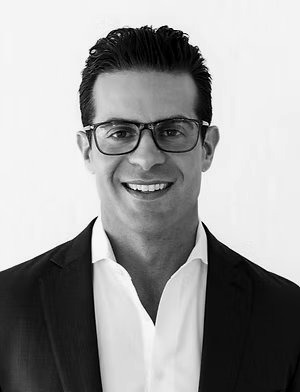
Shaun Eck
Managing Partner · Co-FounderHe came from Merrill Lynch, then a family office. Eighteen years building portfolios and estate plans for business owners and their families. He runs the investment side of Quantus.
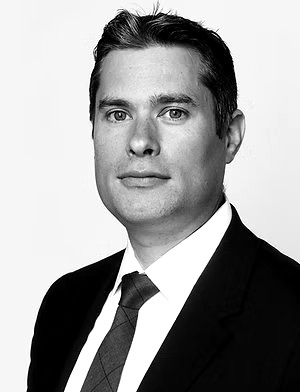
Jordan Frenkel, CPA, MBA
Managing Partner · Co-FounderHe was an executive at Guggenheim Partners. His whole career has been about how businesses, investments, and estates get set up and taxed. He builds the models behind every client plan. He runs the tax side of Quantus.
Sheet G-001 · General Notes
§ 09 · Questions
What people ask.Answered honestly.
Next step
Next Step
Book a 30-minute call.
We'll figure out whether working together is the right next step for your situation. No sales pitch, no follow-up sequence. Thirty minutes with Shaun and Jordan.